Volume Booster - Sound Speaker
- 4.9
- Rating
- 5.00M
- Installs
- Free
- Price

 Analysis by App-foxy
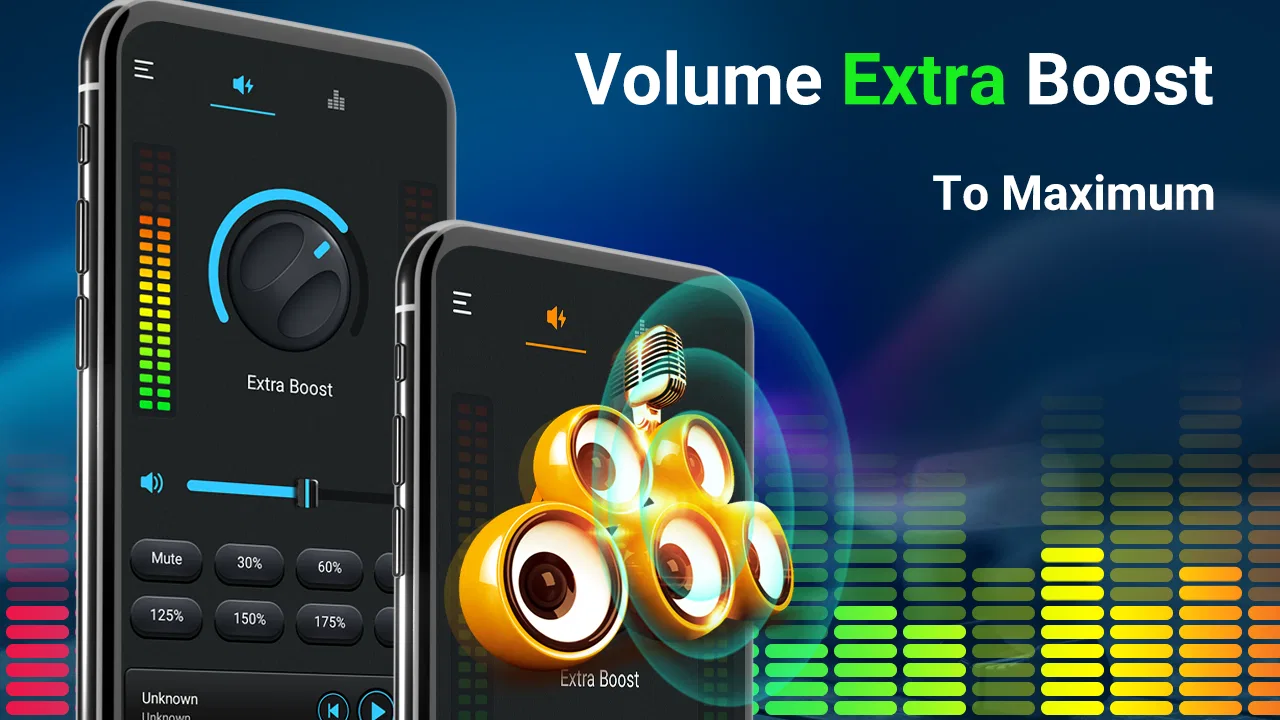
I tested Volume Booster - Sound Speaker as a practical way to make phone audio more noticeable, and my first impression was straightforward: it is designed for people who want a louder listening experience without spending time adjusting several separate sound controls. It belongs to the Music & Audio category, comes from iMediaStar, and is free to install. The central idea is simple, but deciding whether it is worth keeping depends on what you listen to, where you listen, and how much control you expect from an audio app.
In everyday use, I found the app most relevant when the phone’s normal output felt too quiet for a podcast, spoken video, casual music session, or notification. It is not trying to be a full recording studio or a detailed equalizer for audio enthusiasts. Instead, it focuses on a single practical problem: increasing the apparent loudness of media played through the phone. That narrow purpose is also its main strength, because I could understand what to do immediately.
How I Decided Whether the Booster Was Useful
My first decision criterion was convenience. A volume tool is only helpful if it can be used quickly, without making me search through menus every time I change from music to a video. The app’s short description, “Volume Booster,” accurately reflects its direct approach. I treated it as a quick adjustment layer rather than a replacement for the phone’s entire sound system.
You May Also Like

 Blood Strike: 2.5 Anniversary
Blood Strike’s Loadouts Turn Every Drop Into a Tactical Gamble
A close look at Blood Strike’s custom loadouts: how fast access to signature weapons reshapes its battle royale rhythm, rewards preparation, and narrows the gap between fights.

 Pandora - Music & Podcasts
Pandora’s Music Is Easy to Start, but Harder to Recover
Pandora’s strength is its low-effort path from a seed to a station. Its weak spot is how much confidence it asks you to place in connection, setup, and quiet recovery.

 8 Ball Pool
 Is Built on Rivalries, Rematches, and Routine
A close look at the rivalries, rematches, shared routines, and unanswered safety questions that turn a quick pool match into a persistent mobile community.

 Samsung Music
’s Quiet Strength Is Playing What You Already Own
Its reach comes less from spectacle than from dependable access to a personal library. That simplicity is both the app’s strongest retention engine and its ceiling.

 AccuWeather: Weather Radar
AccuWeather Review: A Quick, Clear Forecast for Everyday Decisions
For everyday plans, the best forecast is the one you can understand quickly. AccuWeather makes rain timing, radar, and local conditions easy to act on, with a few trade-offs.

 Hill Climb Racing
Why Hill Climb Racing Still Turns Crashes Into One More Run
A tiny car, a bumpy hill and one more upgrade: Hill Climb Racing keeps resurfacing because its simple chaos makes every near-miss feel personal.
More From Our News Desk



The second criterion was control. Louder is not automatically better. Raising output can make speech easier to hear, but it can also make music feel harsh, expose distortion, or reduce listening comfort. I therefore paid attention not only to whether the sound became stronger, but also to whether the result still suited the source. A quiet spoken recording benefits from a different approach than a heavily compressed music track.
The third criterion was compatibility with normal habits. I wanted to know whether the app made sense for someone who listens through the built-in speaker, uses wired headphones, or connects to another audio device. A booster can be useful in one of those situations and unnecessary in another. That distinction matters more than a high store rating because audio output is affected by the phone, the media source, and the listening environment.
The app has an average rating of 4.9 from around 56 thousand ratings, with roughly 795 written reviews, and it has passed 5 million installs. Those figures suggest that many people find the basic idea useful, but I would not treat popularity as proof that it will improve every kind of audio. My own experience was more conditional: it is convenient when the phone speaker is the limiting factor, while headphones or an external speaker may already provide the better solution.
What the Simple Approach Gets Right
The strongest part of the experience is that the purpose is immediately understandable. I did not need to learn a complicated audio workflow before trying it. For someone who regularly says, “I can barely hear this,” that low learning curve is valuable. The app is especially approachable for family members who do not want to compare equalizer bands or understand technical audio terms.
I also like the distinction between making something louder and making it clearer. A louder setting can help dialogue stand out in a noisy room, but it cannot repair a poorly recorded source. If a video has muffled speech, increasing the output may make the muffling more prominent rather than solving it. I found the best results came from using the booster modestly and then moving closer to the phone or reducing background noise.
One useful habit is to adjust the level before starting a long listening session, rather than pushing it up suddenly after the audio has already begun. That gives me a chance to notice whether the sound remains comfortable. It is also sensible to return to a normal level before switching to headphones, because a setting that feels acceptable through a small phone speaker may be unpleasant through more sensitive earphones.
Another practical use is checking a phone in a temporary environment. If I am following a recipe video in the kitchen or listening to spoken instructions while doing household work, I may not want to carry an external speaker. In that situation, the app can make the phone more usable at a short distance. I would still avoid placing the device next to water, heat, or loose objects that could vibrate against it.
Where It Makes More Sense Than the Usual Alternatives
The usual alternative is the phone’s built-in volume control. That is perfectly adequate when the source is already loud and the surroundings are quiet. The advantage of this app is not that it replaces the basic control, but that it gives the user a dedicated way to pursue stronger output when the normal range feels insufficient.
A second alternative is an equalizer. Equalizers are better when the problem is balance rather than overall loudness. For example, reducing excessive bass can make speech easier to understand, while adjusting midrange frequencies may suit a particular style of music. However, an equalizer can require trial and error. I would choose the booster when I want a quick, broad increase and do not want to tune individual frequencies.
The third alternative is a physical Bluetooth speaker or headphones. These are usually the better choices for room-filling sound, longer listening, or more controlled audio. They can offer a clearer and more comfortable experience than forcing extra output from a small phone speaker. The trade-off is that they require another device, charging, carrying space, or a connection step. Volume Booster - Sound Speaker wins when convenience matters more than maximum quality.
A fourth option is changing the media source itself. Some apps, videos, or recordings are mixed quietly, and another version of the same content may be easier to hear. This is often the cleanest fix, because it avoids pushing the entire output harder. The booster is more useful when the source cannot easily be changed, such as a live stream, a saved clip, or an audio file that is consistently softer than the rest of the phone.
Everyday Situations Where I Would Use It
Imagine listening to a spoken news clip while preparing breakfast. The kitchen fan and running water make the phone’s normal speaker hard to hear. I would place the phone on a stable, dry surface, start the clip, and increase the output gradually. The goal would not be the loudest possible setting; it would be a level that keeps the words understandable without making the speaker sound strained.
For a video call, I would be more cautious. A booster may make the other person easier to hear, but it does not improve their microphone, connection, or pronunciation. It may also make feedback or harshness more noticeable depending on the setup. For important calls, headphones or a dedicated speakerphone are usually the safer choice because they provide more predictable listening comfort.
For music, my advice is even more selective. A quiet acoustic track may benefit from a small increase, especially in a room with background noise. A dense electronic or rock track may become tiring when pushed too far. I would use the app as a gentle lift, not as a permanent maximum-volume setting. This is one of the less obvious trade-offs: the app can solve a volume problem while creating a quality problem if I treat loudness as the only goal.
It can also help when testing whether a phone’s speaker is simply too quiet for a particular situation. I would compare the same clip at the ordinary system level and then with the booster, keeping the source unchanged. That quick comparison tells me whether the app is addressing my problem or whether I really need better hardware. This prevents me from expecting software to overcome the physical limits of a tiny speaker.
Limits I Would Consider Before Installing
The most important limitation is that extra loudness cannot guarantee extra clarity. If the recording is badly mixed, the speaker is already distorting, or the room is extremely noisy, increasing output may not produce a satisfying result. In my view, this app should be considered a convenience tool, not an audio repair system.
There is also a listening-safety issue. I would not use any volume booster as an excuse to listen loudly for long periods. Comfortable listening matters more than reaching the highest available level, particularly with headphones. I would lower the setting whenever the sound feels sharp, tiring, or physically uncomfortable, and I would never assume that louder playback is harmless simply because the app makes it easy.
Another point is that results can vary between media sources. A music player, browser video, game, and locally stored recording may not react in exactly the same way to a volume adjustment. I would test the specific content I care about instead of assuming that success with one app means every other app will sound identical.
The free price makes trying it easy, but the app includes optional in-app purchases ranging from $1.99 to $9.99 per item. That means I would test the free experience first and decide whether the added value justifies any purchase before committing. Since the main purpose is narrow, I would be careful about paying if my real need is an equalizer, better headphones, or a physical speaker.
The age rating is Everyone, which fits the straightforward nature of a general audio utility. It runs on Android 6.0 and later, and the current version is 3.2.8. Those details make it accessible to people using older compatible phones, although the actual listening result will still depend heavily on the handset’s speaker and the audio source.
What Switching to It Actually Costs
Switching from the normal phone controls to this app costs little in terms of money because the download is free. The larger cost is attention. I have to remember that a boosted setting may not be appropriate when I move from the phone speaker to headphones or another output device. That extra check is small, but it is important if I regularly change how I listen.
There is also a habit cost. Once a louder level feels convenient, it can be tempting to leave it enabled and forget that different content needs different treatment. I would build a simple routine: use a moderate level, check the first few seconds of a new source, and reduce it before connecting headphones. This makes the app more useful and avoids treating every recording as if it had the same volume requirements.
Compared with buying a Bluetooth speaker, the app is cheaper and faster to try, but it cannot provide the same physical separation, room coverage, or likely sound quality. Compared with installing an equalizer, it is easier to understand but offers a less specialized answer to tonal problems. Compared with doing nothing, it may make quiet media more usable, but only when the phone’s output is genuinely the bottleneck.
That is why I would not recommend installing it automatically just because a phone feels quiet once. First, I would try the system volume, check the media player’s own setting, and test the same content in a quieter place. If the problem remains and I mainly use the phone’s built-in speaker, this app becomes a sensible low-risk experiment.
My Recommendation for Different Listeners
I would recommend Volume Booster - Sound Speaker to someone who wants a quick way to make phone media more audible, especially for spoken content, casual videos, or occasional listening without extra hardware. Its free entry point, clear purpose, Everyone rating, and broad Android compatibility make it easy to try. The strong user response, including a 4.9 average and more than 5 million installs, also indicates that the basic use case resonates with many people.
I would be more cautious about recommending it to an audio enthusiast, someone who mainly uses quality headphones, or anyone expecting detailed equalizer controls. Those listeners are likely to gain more from a dedicated audio player, a carefully chosen equalizer, or better playback hardware. The same applies to people whose real problem is muffled speech, poor recording quality, or an unreliable speaker: more output may not address the underlying issue.
My best practical advice is to treat the app as a controlled boost, not a permanent loudness switch. Start low, test it with the exact media you normally use, and compare the result with headphones or an external speaker if clarity matters. If the sound becomes harsh or tiring, the correct decision is to lower the level or choose another solution rather than pushing further.
Overall, I see Volume Booster - Sound Speaker as a focused utility that earns its place when the phone speaker is almost adequate but not quite loud enough. It does not replace good audio hardware, and it cannot fix every recording, yet it can remove a small daily annoyance with very little commitment. Its real strength is convenience, while its real weakness is that louder output can be mistaken for better sound. For occasional phone-based listening, I would try it; for serious or long listening sessions, I would choose the better-sounding alternative instead.
FAQs for Volume Booster - Sound Speaker
01What is Volume Booster - Sound Speaker, and how does it work?
Volume Booster - Sound Speaker is an audio-enhancement app designed to make music, videos, games, notifications, and other media sound louder than the standard device volume level. After opening the app, you can usually adjust a boost slider and control the desired intensity. The exact result depends on your phone, speakers, headphones, operating-system limits, and the quality of the original audio.
02Can Volume Booster - Sound Speaker make every sound on my phone louder?
The app can improve the volume of supported media and audio playback, but it may not control every sound produced by your device. Some Android or iOS system sounds, phone calls, alarms, Bluetooth devices, and individual applications can use separate volume channels or operating-system restrictions. Before downloading, remember that performance may vary depending on the device model, operating-system version, connected accessories, and the app currently playing audio.
03Is Volume Booster - Sound Speaker safe for my phone and hearing?
The application does not normally damage the phone simply by being installed, but excessive amplification can cause distorted sound, speaker vibration, overheating, or long-term stress on the device speaker. More importantly, listening at very high volume may harm your hearing, especially through headphones. It is best to increase the level gradually, avoid prolonged maximum volume, and reduce the boost whenever audio becomes harsh or distorted.
04Does Volume Booster - Sound Speaker work with headphones, Bluetooth speakers, and earbuds?
Compatibility depends on how the connected accessory handles audio and on the operating system used by your phone. The app may provide a noticeable increase through wired headphones, wireless earbuds, or Bluetooth speakers, but some accessories apply their own volume limits or equalization. Bluetooth devices can also introduce separate controls, so you may need to adjust both the booster and the accessory volume for the best result.
05Is Volume Booster - Sound Speaker free, and does it contain advertisements or in-app purchases?
The availability of free features, advertising, subscriptions, and optional purchases can differ between the Android and iOS versions and may change after updates. Many volume-booster apps provide basic amplification at no cost while reserving advanced controls or an ad-free experience for premium users. Check the application-store listing before installing, especially the permissions, subscription terms, trial conditions, and cancellation details.
Pros
- Quickly boosts audio output for music
- videos
- and calls.
- Simple controls make volume adjustments easy for all users.
- Useful for devices with weak or low built-in speaker volume.
- Works without complicated setup or technical knowledge.
- Compact interface uses minimal storage and system resources.
Cons
- Excessive amplification may cause distortion or crackling.
- High volume can damage speakers or affect hearing over time.
- Results vary depending on the phone model and audio source.
- May not increase volume in every app or Bluetooth device.
- Some features may require ads or in-app purchases.

Volume Booster - Sound Speaker
Gallery